Tag Archives: game developer

Shooting & Dodging

When Space Invaders was released way back in 1978, invariably it would lay down the fundamentals of the shooting game genre. We may refer to this genre simply as shooting games, shmups or even STG’s as the Japanese prefer to call them.
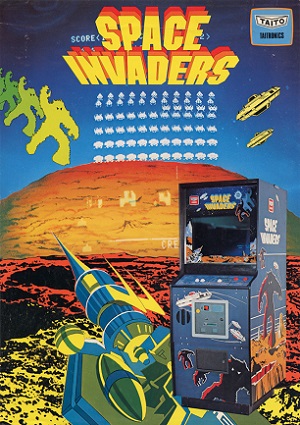
The Grand Daddy of shooting games

However, I wish to clear something up first. A game like Space Invaders is not a shmup in the true sense. This is often a reference to shooting games that have a forced scrolling background either horizontally or vertically. At the very least, Taito’s Space Invaders can be defined as a proto-shmup for lack of a better term.

Genre categories and deviations are not that important right now. The core game mechanics of all shooting games are similar. As the title of this post clearly indicates, it’s all about shooting and dodging. Simple really, almost primal. That’s the main draw after all, shooting the enemy while avoiding  getting hit yourself.

Computers have always been able to handle shooting games incredibly well. It’s a piece of cake for even underpowered systems to make things appear and disappear on screen. All this may give the impression that developing  a shooting game is easy peasy!

If only that were the case. Simplicity should never be underestimated in regards to making things – easier. It takes some deft skills and an elegant touch to piece together a playable shooting game. Developing one for commercial release will often require months of play-testing and polish.

Shooting games also demand a sharp eye for detail. Not just the visual aspect, but also every single enemy placement, every movement and every pattern. And it doesn’t stop there, every bullet that will be fired, direction of fire and even colour, size and damage it can inflict all have to be taken into account. In some cases, these can all total up to over a hundred sprites on screen at once.

With so much happening on the screen, there is plenty that can go wrong. The worst in my opinion is leaving very little wiggle room for the player. So incredibly confined that a direct hit is often unavoidable, thus rendering the game either unfair or unplayable. Reducing the size of the player sprite hitbox is a common solution. My preferred method to solve this issue is smart enemy placement and firing rates.

There are various other solutions, but I won’t go further now. What’s vital is ensuring that shooting and dodging are both fun. It’s essentially the yin and yang of the majority of shooting games and what makes them addictive.


The 16-BIT Shock Design Philosophy

There are many developers that I admire, mostly emanating from Japan, crafting video games as far back as the early 80’s. Growing up during that period I was fortunate enough to enjoy many early works from the likes of Capcom, Data East, Konami, Irem, Namco, Nichibitsu, Sega, Seibu Kaihatsu, SNK, Taito, Tecmo, Technos and Toaplan to name a few. My initial exposure to their games was through various arcade releases and home computer ports — some poor, some mediocre and others simply mind-blowing!

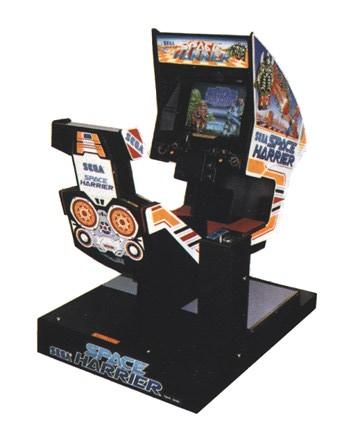
An original Space Harrier arcade cabinet

Be that as it may, time has moved on and so has technology. We’re now 30 years removed from back then and games have changed drastically. Furthermore, gamer tastes are quite different, at least within the mainstream. Retro gamers are still keeping the old flame burning on. Wonderful of them for doing so.

Personally, as a game creator, it would make sense to venture deeply into my own tastes and experiences within the medium. Taking a close look at both past and present examples in order to discover the pinnacle.

If I was obligated to pick only one era in the history of video games that could be clearly defined as exemplary, my answer would be the 16-bit era. Any true gamer worth his salt would respond likewise. The finest games, legendary console systems and revered coding houses were doing the business between 1987 to around 1995.

Great games were developed before and after this period, however the zenith particularly for 2D games occurred during the age of 16-bit. Keeping the fundamentals of the pioneering 8-bit generation, but enhancing and refining control, play, visuals and sound in such a way that a significant leap forward was achieved.

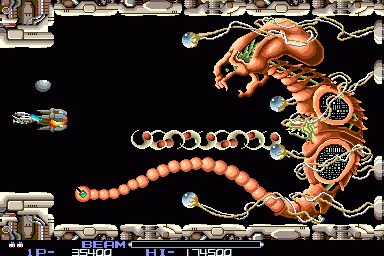
Irem knew a thing or two about making shmups

Which finally brings forth the point of this article. I choose to have a design philosophy, that is,  purist to the core in following conventions that are steeped in tradition of that generation. Retaining the tight core game mechanics, challenge levels, intricately detailed pixel art and melodious chip music that made this amazing period. Avoiding to over-engineer and adding any unnecessary tropes found in modern gaming that would water down the final outcome.

Experimentation and some interesting surprises are destined to become part of my projects. Considering my approach is retrospective in nature, does not mean that I subscribe to any limiting convictions, in terms of game design and narrative. Plenty of room will be given to allow the unexpected to take place.

This Is For Retro Lovers

Welcome to the official site of 16-BIT Shock. It’s great to have you here and hope you will find much of value in the coming weeks and months. There’s plenty in store for those with a penchant for some retro gaming goodness.

Expect a blog that will be updated regularly, primarily for game project updates as well as other related topics. Straight to the point, expect a wider scope of subject matter to be covered, beyond the boundaries of gaming.  It wouldn’t be out of place to talk about the intricacies of an electronic medium such as video games, without referencing electronic music. The two go together like hand in glove that it would be a missed opportunity to ignore the connection.

And there’s much that’s positively retro in music these days as much as it is in gaming. An auspicious occurrence which is one of the reasons 16-BIT Shock came to be. A love for explosive, colourful, pixelated worlds with an ear to synthesized melodies are the raison d’etre.

Capturing the purity, the nostalgia and perhaps even some of the pretentiousness of a bygone era and reflecting that into today’s digital spaces.

Stay Righteous, Stay Retro!