Tag Archives: shmups

Bass Cadet 01 – Thunder Force IV

Welcome to my new weekly feature – Bass Cadet.

Every week I will be showcasing a piece of music that’s relevant to the retro enthusiast right here on Bass Cadet. Requirements and criteria for a me to cover a single track, album or even a live performance are as follows:

  • Composition must be strictly electronic.
  • The production may be for a game or any other medium but it must be able to work as a game soundtrack.
  • Vitally important for all compositions to be instrumental but samples and singing are permitted, provided they are a good match.
  • Experimental compositions are allowed but they must be listenable.
  • It may be an old or new production but it must sound positively retro.
  • Last but not least, it must sound great!

Now that I’ve got that out of the way, let’s kick off this week’s feature with something awesome. Technosoft (also known as Tecno Soft) were the code house behind the truly remarkable Thunder Force series. They were also know for the astounding sound work on their game releases.

Thunder Force IV on the Sega Mega Drive (Genesis for those in the U.S.) is one of my favourite horizontal scrolling shmups of all time. It’s just one of those games that strikes the right balance between visuals, sound and play mechanics. A masterpiece bar none.

Since TFIV was developed for the Mega Drive the music is obviously using the system’s Yamaha YM2612 FM-based chip. The previous article covered FM-Synthesis and gave some excellent examples of it’s applications.

However, Thunde Force IV is the standard-bearer for FM-Synthesis on the Mega Drive. Composed by Takeshi Yoshida, Toshiharu Yamanishi and Tomomi Otani they managed to put that little Yamaha chip through it’s paces. If you click on the video above, the results speak for themselves. Fusing techno-jazz with metal, this can only be described as 16-bit cyber thrash, space orchestra. Enjoy!


The 16-BIT Shock Design Philosophy

There are many developers that I admire, mostly emanating from Japan, crafting video games as far back as the early 80’s. Growing up during that period I was fortunate enough to enjoy many early works from the likes of Capcom, Data East, Konami, Irem, Namco, Nichibitsu, Sega, Seibu Kaihatsu, SNK, Taito, Tecmo, Technos and Toaplan to name a few. My initial exposure to their games was through various arcade releases and home computer ports — some poor, some mediocre and others simply mind-blowing!

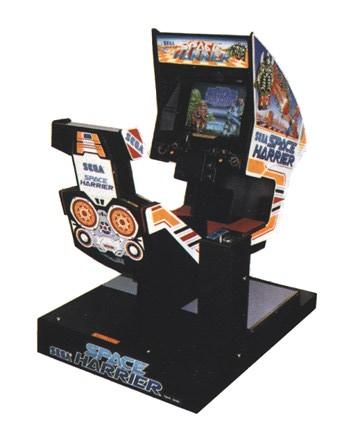
An original Space Harrier arcade cabinet

Be that as it may, time has moved on and so has technology. We’re now 30 years removed from back then and games have changed drastically. Furthermore, gamer tastes are quite different, at least within the mainstream. Retro gamers are still keeping the old flame burning on. Wonderful of them for doing so.

Personally, as a game creator, it would make sense to venture deeply into my own tastes and experiences within the medium. Taking a close look at both past and present examples in order to discover the pinnacle.

If I was obligated to pick only one era in the history of video games that could be clearly defined as exemplary, my answer would be the 16-bit era. Any true gamer worth his salt would respond likewise. The finest games, legendary console systems and revered coding houses were doing the business between 1987 to around 1995.

Great games were developed before and after this period, however the zenith particularly for 2D games occurred during the age of 16-bit. Keeping the fundamentals of the pioneering 8-bit generation, but enhancing and refining control, play, visuals and sound in such a way that a significant leap forward was achieved.

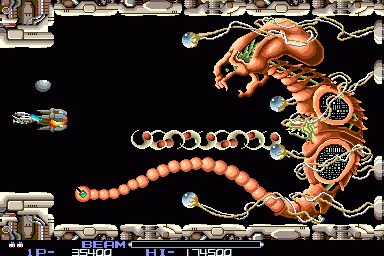
Irem knew a thing or two about making shmups

Which finally brings forth the point of this article. I choose to have a design philosophy, that is,  purist to the core in following conventions that are steeped in tradition of that generation. Retaining the tight core game mechanics, challenge levels, intricately detailed pixel art and melodious chip music that made this amazing period. Avoiding to over-engineer and adding any unnecessary tropes found in modern gaming that would water down the final outcome.

Experimentation and some interesting surprises are destined to become part of my projects. Considering my approach is retrospective in nature, does not mean that I subscribe to any limiting convictions, in terms of game design and narrative. Plenty of room will be given to allow the unexpected to take place.