Tag Archives: retrogaming

Shooting & Dodging

When Space Invaders was released way back in 1978, invariably it would lay down the fundamentals of the shooting game genre. We may refer to this genre simply as shooting games, shmups or even STG’s as the Japanese prefer to call them.
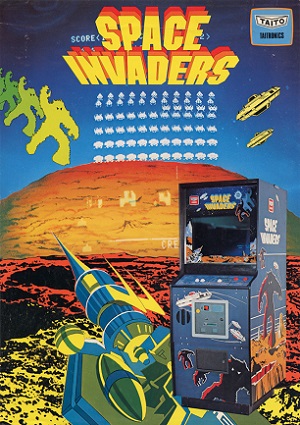
The Grand Daddy of shooting games

However, I wish to clear something up first. A game like Space Invaders is not a shmup in the true sense. This is often a reference to shooting games that have a forced scrolling background either horizontally or vertically. At the very least, Taito’s Space Invaders can be defined as a proto-shmup for lack of a better term.

Genre categories and deviations are not that important right now. The core game mechanics of all shooting games are similar. As the title of this post clearly indicates, it’s all about shooting and dodging. Simple really, almost primal. That’s the main draw after all, shooting the enemy while avoiding  getting hit yourself.

Computers have always been able to handle shooting games incredibly well. It’s a piece of cake for even underpowered systems to make things appear and disappear on screen. All this may give the impression that developing  a shooting game is easy peasy!

If only that were the case. Simplicity should never be underestimated in regards to making things – easier. It takes some deft skills and an elegant touch to piece together a playable shooting game. Developing one for commercial release will often require months of play-testing and polish.

Shooting games also demand a sharp eye for detail. Not just the visual aspect, but also every single enemy placement, every movement and every pattern. And it doesn’t stop there, every bullet that will be fired, direction of fire and even colour, size and damage it can inflict all have to be taken into account. In some cases, these can all total up to over a hundred sprites on screen at once.

With so much happening on the screen, there is plenty that can go wrong. The worst in my opinion is leaving very little wiggle room for the player. So incredibly confined that a direct hit is often unavoidable, thus rendering the game either unfair or unplayable. Reducing the size of the player sprite hitbox is a common solution. My preferred method to solve this issue is smart enemy placement and firing rates.

There are various other solutions, but I won’t go further now. What’s vital is ensuring that shooting and dodging are both fun. It’s essentially the yin and yang of the majority of shooting games and what makes them addictive.


Bass Cadet 01 – Thunder Force IV

Welcome to my new weekly feature – Bass Cadet.

Every week I will be showcasing a piece of music that’s relevant to the retro enthusiast right here on Bass Cadet. Requirements and criteria for a me to cover a single track, album or even a live performance are as follows:

  • Composition must be strictly electronic.
  • The production may be for a game or any other medium but it must be able to work as a game soundtrack.
  • Vitally important for all compositions to be instrumental but samples and singing are permitted, provided they are a good match.
  • Experimental compositions are allowed but they must be listenable.
  • It may be an old or new production but it must sound positively retro.
  • Last but not least, it must sound great!

Now that I’ve got that out of the way, let’s kick off this week’s feature with something awesome. Technosoft (also known as Tecno Soft) were the code house behind the truly remarkable Thunder Force series. They were also know for the astounding sound work on their game releases.

Thunder Force IV on the Sega Mega Drive (Genesis for those in the U.S.) is one of my favourite horizontal scrolling shmups of all time. It’s just one of those games that strikes the right balance between visuals, sound and play mechanics. A masterpiece bar none.

Since TFIV was developed for the Mega Drive the music is obviously using the system’s Yamaha YM2612 FM-based chip. The previous article covered FM-Synthesis and gave some excellent examples of it’s applications.

However, Thunde Force IV is the standard-bearer for FM-Synthesis on the Mega Drive. Composed by Takeshi Yoshida, Toshiharu Yamanishi and Tomomi Otani they managed to put that little Yamaha chip through it’s paces. If you click on the video above, the results speak for themselves. Fusing techno-jazz with metal, this can only be described as 16-bit cyber thrash, space orchestra. Enjoy!


An Introduction to FM Synthesis & Ocular Audio

As someone that grew up with arcade games and 80’s synthpop music, I cannot hide my fondness for FM Synthesis. This was the sound of the future and in a somewhat mystical way, still is.

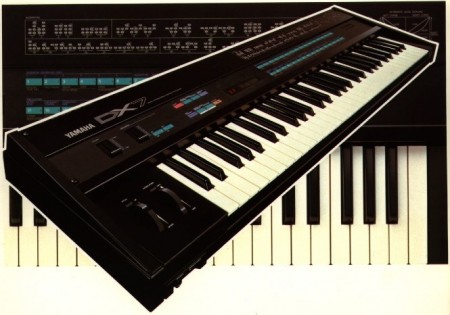
It can sound tinny, aggravatingly metallic or warm and bass-heavy. Aural landscapes that are representative of both happy, fuzzy worlds and those that are dystopian. Light and darkness all produced in an embedded range of chips manufactured by Yamaha. These chips would find a home in Yamaha’s famous DX7 digital synthesizers, arcade boards and PC sound cards from AdLib and Creative Lab’s early Sound Blaster range.

Yamaha's DX7 - The Workhorse Of Many Hit Songs
Yamaha’s DX7 – The workhorse of many hit songs

Enough can’t be said about all the sounds that were coming out of all these synthesizers, arcade cabinets and sound cards. Sounding incredibly synthetic, plastic even. And somehow they became relevant in a sea of naysayers. Melodies were supposed to be the preserve of the musician who could actually play real instruments, not some midi punk.

In a sense, keyboard players and sound coders were in all likelihood working harder than the average traditional musician. Many electro/synthpop bands were notorious for spending hours on end, tweaking the settings on their synthesizers to get a unique sound- they could call their own.

At the other camp, programmers would often hand code sound routines in assembly in order to fit in the music. Given the memory limitations of home computers, consoles and arcade systems during that time period, this was not exactly an easy task to achieve. Not to mention that FM synthesis is known for it’s quirks and complexity.

Over the past few months I’ve come into contact with a composer that specializes in audio production for games and film. Joe Gilliver – BA Hons of Ocular Audio has been kind enough to write the next article for my blog, which will cover FM synthesis deeper. Joe is based in the UK and is currently working on a project called Black Shuck.

Apart from demystifying FM synthesis, Joe has also written this article which gives greater insight of his current project at Gamedev.net.