I would like to start this article by thanking Demos at 16-BIT Shock for the opportunity to write a series on FM Synthesis within video game audio for his blog. It’s a great opportunity and I hope everyone that reads it will find the articles informative and helpful. This first article is primarily going to give an overview of FM synthesis within video game audio, popular chips used within consoles, and also a brief overview of how FM synthesis works.
How FM Synthesis Works (simplified):
Whereas subtractive synthesisers use fixed waveshapes as the basis for their sounds, Frequency Modulated synthesisers create sounds by modulating (changing) waveforms with the frequency of another. The most simple set up is having one carrier wave and then the modulator wave which modulates the frequency of the carrier wave (see image below).
Popular sounds created by FM synthesis are those of the organ, electric piano, plucked instruments and pitched percussion. However as operators per channel increases so can the complexity of the sounds.
8-bit chiptunes largely consist of basic waveforms such as square, pulse, sawtooth and triangle. And basic percussion sounds could then be provided by using a white noise generator through an ADSR envelope, or through FM synthesis. However, as chips advanced and the number of operators and channels increased, so could the sounds produced using FM synthesis.
To understand how to make FM synthesised sounds though we first need to learn how it works. In later articles I will be delving into the detail of creating various sounds. By looking at some of the maths behind FM synthesis, you can quickly obtain a good understanding of how flexible it is a generator for wide array of sounds.

A History Lesson (but not a boring one):
Frequency Modulated (FM) synthesis was developed by John Chowning throughout the late 1960’s, and eventually patented in 1975. It is a form of audio synthesis that allows the production of complex sounds within a digital environment, rather than requiring analog hardware. In the 1970’s and 80’s this meant complex synthesised sounds could now be produced within digital apparatus, and not using physical hardware like analog synths required.
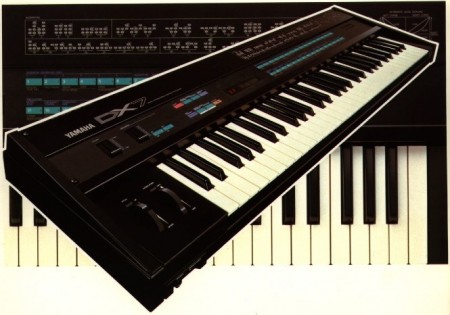
In 1977 Yamaha licensed the patent and by utilising the technology manufactured chips. Through manufacturing chips that became the cornerstone of FM synthesis within video game consoles, and producing the very famous DX7 synthesiser, Yamaha became respected as the purveyors of Frequency Modulated synthesis. It was FM chips that when implemented into gaming consoles allowed greater flexibility with regards to audio and required little memory power. Therefore resulting in more expressive music with minimum constraints on the machines themselves.
By the time 1983 rolled around and everyone was donning Mad Max attire, Konami’s ‘Gyruss’ was utilising five FM synthesis chips for in game music. Playing some Johann Sebastian Bach in all its glory it displayed the array of voices that could be utilised – https://www.youtube.com/watch?v=TNc7VdD-ink
FM synthesis was one of the major advances in consoles for the 16-bit era and in 1988 Sega introduced the Mega Drive (Genesis). This was the first 16-bit game console to come to market, as well as the first to feature a Yamaha FM chip, the YM2612.
The greater flexibility of using FM chips gave way to more intricate compositions, and two highly regarded composers of FM synth video game music are Yuzo Koshiro and Takeshi Abo. As one of the major chiptune composers of the time, Yozu Koshiro produced music for Shinobi, The Revenge Of Shinobi and Streets Of Rage, to name a few. His Streets Of Rage 2 soundtrack was considered ahead of its time and revolutionary in its composition.
Chipping Away:
As Yamaha were viewed as the purveyors of FM synthesis and their chips were so widely used, I thought it would be appropriate to look at their chips in a bit more depth. I will give a brief overview of the most popular chips, and where possible give examples of what some of the audio from them sounded like.
Yamaha YM2203
– Notable uses: A variety of NEC computers alongside various arcade machines
– Three FM channels (voices)
– Four operators per channel
– FM sine wave operators
– Audio: https://www.youtube.com/watch?v=zCNZpn5lBj0#t=13
Yamaha YM2608
– Notable uses: NEC’s PC-8801/PC-9801 / Megadrive
– Successor to YM2203
– Sixteen channels overall
– Six FM channels
– Four operators per channel
– Three channels of square wave synthesis via implementation of YM2149/SSG
– Single channel for 8-bit sample play back
– Rhythm Sound Source: six channel percussion playback system
– Audio: https://www.youtube.com/watch?v=FhzHlmzLBwk
Yamaha YM2610
– Notable uses: SNK’s Neo Geo arcade and home game systems
– Fifteen channels
– Four FM channels
– Three channels of square wave synthesis via implementation of YM2149/SSG
– A total of seven ADPCM (pulse code modulated) channels
– One noise channel
– Single LFO (low frequency oscillator)
– Audio: https://www.youtube.com/watch?v=N_uQXQkgFxc
Yamaha YM2612
– Notable uses: Genesis / Megadrive
– Stripped back version of the YM2608
– Six FM channels (voices)
– Four operators per channel
– Sine wave low frequency oscillator
– Audio: https://www.youtube.com/watch?v=3XHl2P3TRxw
Stay tuned for the next article where we will discuss the creation of two key drums sounds. The kick drum and toms. I will be explaining in more depth how FM synthesis and it may be wise to have a calculator handy. In the mean time, wrap your ears around some music made exclusively from FM synthesis:
http://ubiktune.com/releases/ubi044-various-artists-soundshock-2-fm-funk-terrror
Joe Gilliver – BA Hons (Ocular Audio)
Composer | Producer | Sound Designer
 16-BIT Shock