Category Archives: Game Development

Simplicity

Taito is a game company I’ve always had a soft spot for. We don’t hear much from them these days but they are still around. I believe they were bought by Square Enix as of 1995 and the rest as they say, is history. Sadly, it seems that Taito is now a shell of it’s former self – an arcade heavyweight with an enviable back catalogue.

80s,90s,80's,90's,retro,retrogaming,gaming,games,juegos,taito,arkanoid,arkanoid2,2,revenge,of,doh,arcade,arcades,8bit,8-bit,16bit,16-bit,logo,developer,gamedev,corporation,toaplan,technos,skyshark,space,invaders,sky,shark,flying,gun,buster,frontier,layer,section,elevator,action,2d,platformer,platformers,shmup,shmups,puzzle,puzzler,breakout,break,out,square,enix
Taito’s older company logo

Responsible for a prolific assortment of hits such as Arkanoid, Arkanoid – Revenge of Doh, Bubble Bobble,  Buggy Challenge, Chase H.Q., Darius, Elevator Action, Exerion, Gun Frontier, Gyrodine, KiKi KaiKai, Layer Section, Operation Wolf, Operation Thunderbolt, Rastan, Runark, Slap Fight, Space Invaders, The Legend of Kage,  The New Zealand Story, The Ninja Warriors, Volfied – and that’s just the tip of the iceberg. There are plenty more that I have missed, excluding games Taito published from the likes of Toaplan & Technos Japan Corp.

The majority of titles mentioned above are lauded enthusiastically by retro game fans, worldwide. Certainly Taito provided the good times, leaving many of us with fond memories. Simple games, stylish games, colourful games with straightforward missions and game play. Hundred percent arcade experiences with no false pretense of attempting to be anything other.

I guess one of the charms of a Taito game is in it’s pure simplicity. No unnecessary bells and whistles to cloud proceedings. Leaving us with nothing more but a video game in it’s utmost sincerest form. Arkanoid and it’s sequel – Revenge of Doh, exemplifies this splendidly. While essentially a Breakout clone at it’s core, Arkanoid bends a few rules and eventually comes into it’s own. Power-up capsules, enemy ships and cleverly laid out brick formations helped to elevate it above Breakout and other similar clones.

80s,90s,80's,90's,retro,retrogaming,gaming,games,juegos,taito,arkanoid,arkanoid2,2,revenge,of,doh,arcade,arcades,8bit,8-bit,16bit,16-bit
A stylish logo for a stylish game

Nevertheless, even with those few additions, Arkanoid and Revenge of Doh are amazingly simple and addictive games. And I never tire returning for another go. They hold up well to this very day, still exuding a fine and dapper air while never having lost the fun factor. Everyone with even a passing interest in games should experience both at some point in their lives.

From a game developer’s standpoint, much can be garnered from Taito’s past output. I won’t hide that there is some influence on my project. Maybe it was inevitable, having played so many of their games since my youth. Fortunately it’s a positive influence and that can only be helpful in the end. The process of developing my game has gradually taught me to keep things simple. Complicated and bloated concepts are stripped away but keeping the fun close by.



Developing For Vintage Hardware

It was a hectic but very productive week here at 16-BIT Shock HQ. Progress on the development of Project MSG continues tenaciously. While I’m not in a position to give a solid release date, it won’t be too far away.

Given the retro leanings of the project, there has been interest by some members of the homebrew community. I’ve been asked if there is a possibility for the game to be ported over to certain vintage systems. While neither myself or my development partner can commit to any additional platforms, right way. After all, Android support is by far the most requested platform for obvious reasons.

I also have a burgeoning interest in HTML5 development lately. Whether Project MSG is suited for this remains unclear – time will tell. 

sega,genesis,megadrive,mega,drive,retro,retrogaming,games,gaming,console,consoles,system,systems,japan,japanese,16bit,16-bit,80s,80's,90s,90's
Sega’s Mega Drive boasts one of the finest exterior designs for a game console

Nevertheless, developing for vintage hardware is an intriguing prospect that personally find exciting. The Sega Mega Drive / Genesis is the first potential candidate on the list. An amazing 16-bit console that possesses, near ideal specifications for the results that I want. I will need to brush up on my 68000 assembly, perhaps even some Z80 skills will come in handy. Once a proud owner of a Sinclair ZX Spectrum, learned enough Z80 assembly to code a Joust clone. But that was a very long time ago and I’m certainly a bit rusty now.

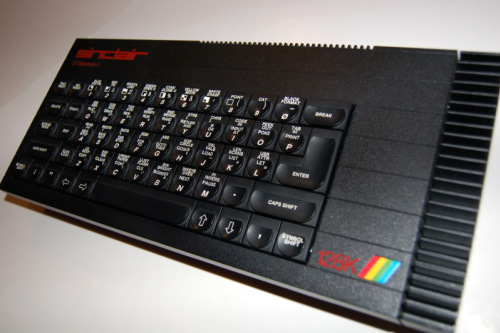
Speaking of the ZX Spectrum, that would make both a good & bad contender for a Project MSG port. It would be quite possible with tight, efficient coding. However, the little 8-bitter is rather weak in some areas. Particularly in the sound department, especially if we’re referring to the 16K/48K variants of the microcomputer. The Spectrum 128 on the other hand, apart from increased RAM also came equipped with the AY-3-8912, a 3-channel audio chip. Capable of producing superior music and sound effects to it’s forerunner.

sinclair,zx,zxspectrum,spectrum,128,128k,128K,RAM,ram,vintage,computer,computers,retro,retrogaming,games,gaming,cassette,cassettes,tape,tapes,micro,microcomputer,microdrive,drive,8bit,8-bit,AY,ay,chip,sound,AY sound chip,ay sound chip,texas,instruments,texasinstruments,yamaha,80s,80's,1982,1983,1984,1985,1986,1987,1988,amstrad,uk,UK,Spain,spain,SPAIN,gamedev,developer,developers
The ZX Spectrum was the true king of the 80’s

In all seriousness though, developing for a 16-bit system such as the Mega Drive or a close counterpart such as the Commodore Amiga, would be ideal. Although they both sport similar processors, they’re entirely different beasts to work on. Specifically in the way the two machines handle graphics, distinctively. The Amiga is well known for it’s graphical prowess and blitter, incredibly advanced for the period. Sega’s Mega Drive on the other hand seems rather anemic in the video display processor (VDP) department. With only 64K of video ram and far smaller colour count to the Amiga, yet breezier in the movement of sprites and 2D planes.

Of course there are several other computers and consoles that could come under consideration. While I’ve never owned one of these, MSX & 2/2+ have fascinated me to some degree. As a huge Compile fan, I loved how Aleste 1 & 2 and Aleste Gaiden turned out on the MSX2. A significantly capable machine that just seems to punch above it’s weight, resulting in output similar to that of Sega’s Master System.

Some food for thought, plenty of great machines of yore to ponder upon. Many of which still retain a huge following to this very day. Hopefully it won’t be long whereby I can lend my support to one or two of these systems.

Project MSG – The Retro-Punk Experience

Last month I was able to reveal a little about the game project that I’ve been working on. Shares, retweets, favourites, +1’s and feedback via messages and email from many of you has been both positive and very encouraging – thank you!

It seems that the ‘Project MSG’ logo made a strong impact. The response that I received, while not entirely unexpected, was rather more enthusiastic than anticipated. While I do concur that it’s a cool looking logo. And as the creator of this logo I would like to add that I do so in a humble and non-boisterous manner. What matters is that you love it!

ProjectMSG_WhiteBackground
I should consider taking t-shirt orders 🙂

The logo has managed to convey and stir up strong nostalgic feelings of 8-bit & 16-bit gaming memories for you lot. As if the mid-80’s or even early 90’s were no longer some forgotten bygone era. I have no intention in ruining those feelings and you can all rest assured that the official logo will still retain this flavour.

Fortunately, you didn’t just like the logo. There was a single screenshot of ‘stage 1-1’ of the game which managed to attain significant attention. Plus a fair amount in the twittersphere. Detailed pixel art graphics are gladly still welcome among retro game fans. This singular shot only gives a small glimpse of the game, but it’s enough to give a basic idea of the styling and gameplay.

Defining this project becomes easier as work progresses. While the initial brief described it as 2D shooting game with a cyberpunk theme. This is still true for the project today. However, newer aspects start to surface that were faintly observed in the initial stages of development.  Comparatively to, an alter ego of some kind, quietly hiding within the shadows of the dominant personality. Only to make itself known at a later date.

Perhaps it all boils down to the aesthetic choices. The clashing of pixel art and FM-synth generated music, while a natural fit gives out a far more raw electronic feel. Due to modern development techniques and increased processing power, we have become accustomed to games that are incredibly slick and shiny. Nothing wrong with this intrinsically. After all, I’m all for high production values and polish in the creation of video games. It’s just that this added fidelity often constitutes in a loss of a raw edge.

This rawness is ultimately part of the charm. It’s not just a retro-centric attribute that I’m pointing out here. It’s inherently punk in nature. Sticking out like a sore thumb, provoking the player that it’s nothing like those big-budget, overproduced but somehow sterile games. Project MSG wants to get dirty!