Category Archives: Game Design

Cybermanga

Plenty of people have asked about my game project – what is it really about?

I’ve always let them know, that it’s a 2D shooting game set within a cyberpunk universe, with anime/manga influences.

Response has been mostly positive. After all, shooting stuff, cyberpunk worlds and big eyes with speed lines are things of great interest to game fans. Of course one could also add anime, manga and sci-fi enthusiasts in there too.

The beauty of anime and manga is the sheer amount steeped in cyberpunk lore. At a drop of a hat I can think of several titles: Akira, Angel Cop, Appleseed, Battle Angel Alita, Black Magic M-66, Bubblegum Crisis, Cyber City Oedo 808, Cybernetics Guardian, Dirty Pair, Genocyber, Ghost In the Shell, M.D. Geist, Megazone 23, Roujin Z, Serial Experiments Lain and Silent Möbius. And that’s just the short list.
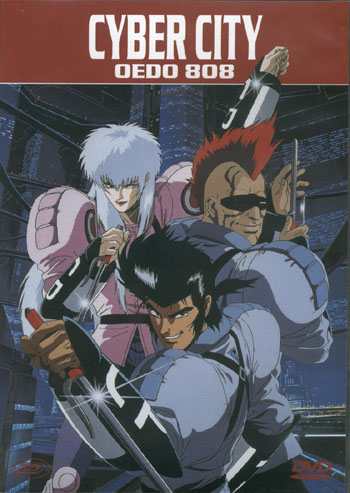
cybercityodeo808
In the future, everyone has great hair

I would recommend, anyone who has even a passing interest in cyberpunk, anime and manga to check out some of the above. If you’ve been playing video games for the past 20+ years, it should not surprise you how much of an influence these have been on your favourite medium.

It’s quite harrowing to pick just one or two titles that have had the biggest influence on me, personally. However, the Appleseed manga just clicked with me two decades ago when I picked up my first copy. Likewise, Akira and Cyber City Oedo 808 both had a profound impact, visually stunning masterpieces that they were and still are.

When I commenced with development of my game, I opted for a cyberpunk theme. Due to the fact that there weren’t too many traditional shooting games based in such a universe. Most tend to be space shooters, which is perfectly fine but didn’t inspire me much to follow suit. It’s not that the concept of a cyberpunk shooting game is terribly original but far less common.

Nevertheless, still a window of opportunity to indulge and create a cyberpunk world with interesting characters that fit the bill. This presented a challenge on how to best depict all this within the boundaries of a two dimensional, top-down viewpoint. How the rich tapestry of manga-infused hyperreality would be brought to life as a shooting game, regardless of confines. 

Fortunately pixel art lends itself beautifully in helping formulate such a world within a retro game format. The tinny, metallic sound of FM synthesis provide the ideal, aural backdrop of a future make-believe dystopia. Cataclysmic electropunk, new wave, synthwave or industrial beats for ersatz cyborgs. All angles are covered.

Sticking feverishly to 80’s neon-noir and anime aesthetics. This was always meant to be a brightly coloured dystopia. The dour mood brought about by modern grey/brown first person shooters have no place in a 16-BIT Shock production. As cheesy and trite as this may sound – I wear shades because the future is bright.


Anti-Establishment

16-BIT Shock was set up for a number of reasons, first and foremost to develop quality retro-style games with a sense of purity. This in itself, is a soft form of revolt against mainstream gaming.

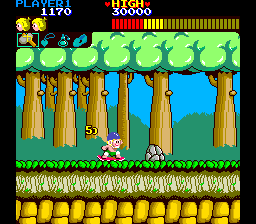
Wonder Boy is a good example of what constitutes a quality game

You may argue that, there are plenty of retro-style games developed in the indie scene these days. Yes, there definitely are. And I happen to be 100% supportive of this. Yet, it still is a revolutionary act to develop these types of games. The mass market is in no way, shape or form encouraging or even supportive of anything that is purely retro.

This is a good thing. A very, very good thing!

If the mass market was truly backing us, not only would we be incredibly uncool. We would be completely irrelevant. For one, we wouldn’t be able to stick out like a sore thumb. And sticking out is what we should be doing – 24/7!

There really are no benefits to pandering to mainstream tastes – none!

I don’t develop games for someone’s grandpa or for someone’s kid. I don’t develop games that you can play with your wife or girlfriend. I don’t develop games that you can play with your family. I don’t develop casual games. I don’t develop social games. I don’t develop multiplayer games.

I develop games strictly for the enthusiast. Particularly the retro game enthusiast.

The reason is simple. I’m an enthusiast myself and just can’t relate with any of the other types of gaming niches. Other people may enjoy them and that’s perfectly fine. I just won’t do them.

I may have come across a bit condescending in this article. To a certain extent, that’s true. Game enthusiasts like myself, who have been gaming for over 3 decades do have a stake in this. We’ve been supporting this medium for a considerable amount of time, and our opinion counts.

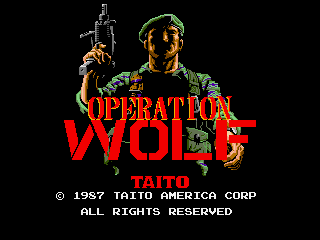
Just the title screen of Operation Wolf is manlier than 95% of today's weak sauce games
Just the title screen of Operation Wolf is manlier than 95% of today’s weak sauce games

Back in the 80’s, popular, mainstream games were: Ghosts ‘n Goblins, Wonder Boy, Green Beret, 1942, Bubble Bobble, Afterburner, Out Run, Gradius, Arkanoid, Operation Wolf, Combat School, Strider and Twin Cobra. What they share in common is that they were all well-made, highly entertaining games and far superior to their modern counterparts.

For the most part, what passes for mainstream and popular nowadays, is a terrible joke. The fact, that games like Angry Birds and that other backroom abortion – Flappy Bird, are a massive success – is telling. No, these are not good games. I don’t want to use expletives, but I will say one thing – these are games fit only for the latrine. 

And that’s what I’m effectively revolting against. And I trust this applies to any self-respecting game creator reading this.

Fight the establishment! Make good games!


Shooting & Dodging

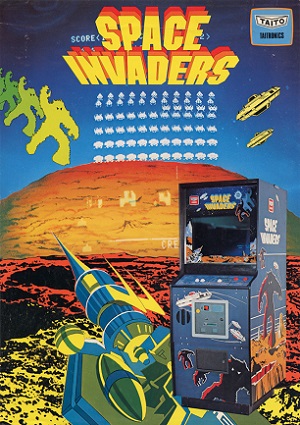
When Space Invaders was released way back in 1978, invariably it would lay down the fundamentals of the shooting game genre. We may refer to this genre simply as shooting games, shmups or even STG’s as the Japanese prefer to call them.

The Grand Daddy of shooting games

However, I wish to clear something up first. A game like Space Invaders is not a shmup in the true sense. This is often a reference to shooting games that have a forced scrolling background either horizontally or vertically. At the very least, Taito’s Space Invaders can be defined as a proto-shmup for lack of a better term.

Genre categories and deviations are not that important right now. The core game mechanics of all shooting games are similar. As the title of this post clearly indicates, it’s all about shooting and dodging. Simple really, almost primal. That’s the main draw after all, shooting the enemy while avoiding  getting hit yourself.

Computers have always been able to handle shooting games incredibly well. It’s a piece of cake for even underpowered systems to make things appear and disappear on screen. All this may give the impression that developing  a shooting game is easy peasy!

If only that were the case. Simplicity should never be underestimated in regards to making things – easier. It takes some deft skills and an elegant touch to piece together a playable shooting game. Developing one for commercial release will often require months of play-testing and polish.

Shooting games also demand a sharp eye for detail. Not just the visual aspect, but also every single enemy placement, every movement and every pattern. And it doesn’t stop there, every bullet that will be fired, direction of fire and even colour, size and damage it can inflict all have to be taken into account. In some cases, these can all total up to over a hundred sprites on screen at once.

With so much happening on the screen, there is plenty that can go wrong. The worst in my opinion is leaving very little wiggle room for the player. So incredibly confined that a direct hit is often unavoidable, thus rendering the game either unfair or unplayable. Reducing the size of the player sprite hitbox is a common solution. My preferred method to solve this issue is smart enemy placement and firing rates.

There are various other solutions, but I won’t go further now. What’s vital is ensuring that shooting and dodging are both fun. It’s essentially the yin and yang of the majority of shooting games and what makes them addictive.