For this series of FM synthesis music I want to go into a fair bit of detail regarding FM synthesis. Especially experimenting with FM synthesisers to make retro music. However this slightly shorter article is going to give a quick overview of the most popular method for creating retro FM game music.
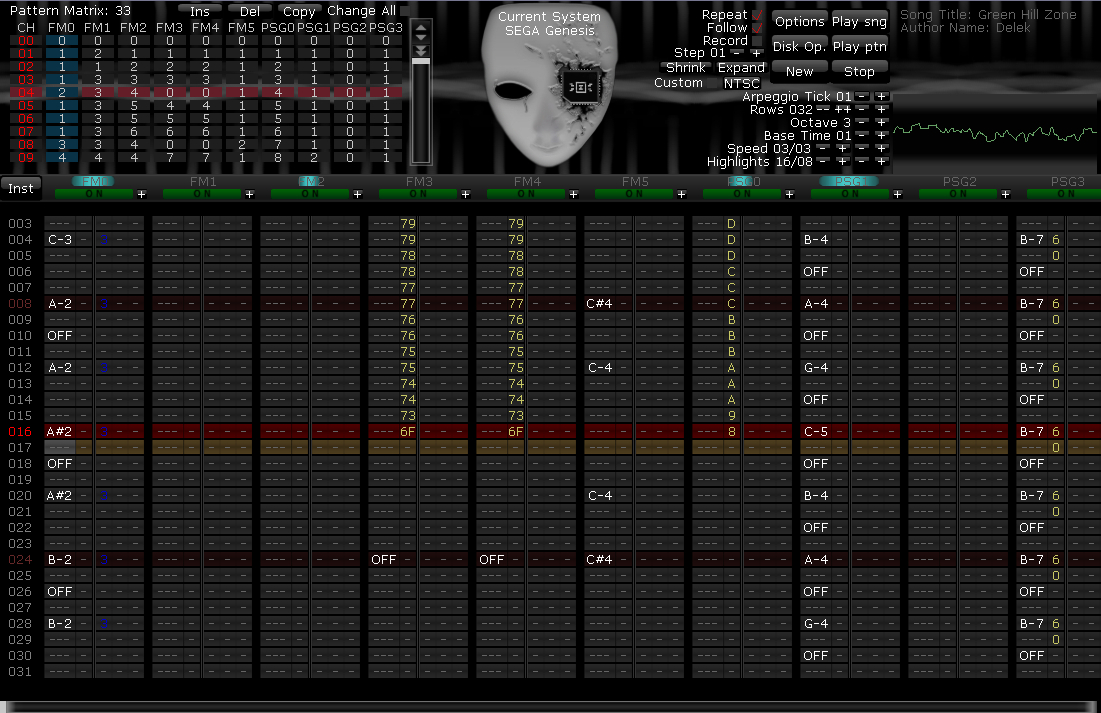
One of the most popular ways to make chiptune music in this day and age is utilising trackers. Trackers are in essence a simplified Digital Audio Workstation (DAW) which rather than being laid out horizontally, for instance how Logic, Ableton, Fruity Loops and other DAW’s are, they are laid out vertically. Typical to trackers are the six following areas:
– Channels (tracks) (these run vertically down and from left to right)
– Notes
– Patterns
– Samples
– Effects
– Orders
There’s some great written and video tutorials online which go in-depth about using trackers so I won’t go into detail here. But essentially trackers work by ordering samples which have been pitched by note value into patterns and orders on the channels. Effects are then used to further enhance the programmed material. Effects in trackers however aren’t the usual reverb, delay, chorus, etc. that you may find in a DAW. But rather ways to add variation to the programmed notes in terms of pitch, stereo positioning and volume. Such effects include Arpeggios, Vibrato, Portamento, Tremolo and Panning.
As mentioned in the previous article there are a number of classic audio chips out there that were used in gaming systems. One chip that was specifically mentioned was the Yamaha YM2612 which was used notably in the Sega Genesis and Megadrive systems. This chip, along with others, have support from such trackers as DefleMask. Meaning you can program audio for specific chips using these trackers.
For further reading (and viewing) I have included some links below of both trackers and tutorials on using them.
Trackers:
http://woolyss.com/chipmusic-chiptrackers.php
http://www.delek.com.ar/deflemask
Tracker Tutorials:
DefleMask Tutorial 1: https://www.youtube.com/watch?v=eGCsrzaIFDE
Techniques Of Chipping: http://milkytracker.org/docs/Vhiiula-TechniquesOfChipping.txt
Making A Chiptune: https://www.youtube.com/watch?v=-TYyDLElP4c
Throughout my years studying music composition and production I have learnt how to program synthesizers for certain projects. As part of this it was a wise idea to learn how to program FM synthesisers. FM synthesis isn’t as easy to get to grips with as subtractive synthesis but it does reap rewards once learned. So throughout future articles, I will discuss how to program FM synthesisers. In discussion will be programming various sounds and how to get the synths sounding retro. Part of this will be covering numerous techniques of how to achieve the retro sound by means of modern effects such as bitcrushing. But we will also look into what else can be done to give the synthesizers and audio the retro game sound.
Joe Gilliver – BA Hons (Ocular Audio)
Composer | Producer | Sound Designer
 16-BIT Shock