Tag Archives: nostalgia

Developing For Vintage Hardware

It was a hectic but very productive week here at 16-BIT Shock HQ. Progress on the development of Project MSG continues tenaciously. While I’m not in a position to give a solid release date, it won’t be too far away.

Given the retro leanings of the project, there has been interest by some members of the homebrew community. I’ve been asked if there is a possibility for the game to be ported over to certain vintage systems. While neither myself or my development partner can commit to any additional platforms, right way. After all, Android support is by far the most requested platform for obvious reasons.

I also have a burgeoning interest in HTML5 development lately. Whether Project MSG is suited for this remains unclear – time will tell. 

sega,genesis,megadrive,mega,drive,retro,retrogaming,games,gaming,console,consoles,system,systems,japan,japanese,16bit,16-bit,80s,80's,90s,90's
Sega’s Mega Drive boasts one of the finest exterior designs for a game console

Nevertheless, developing for vintage hardware is an intriguing prospect that personally find exciting. The Sega Mega Drive / Genesis is the first potential candidate on the list. An amazing 16-bit console that possesses, near ideal specifications for the results that I want. I will need to brush up on my 68000 assembly, perhaps even some Z80 skills will come in handy. Once a proud owner of a Sinclair ZX Spectrum, learned enough Z80 assembly to code a Joust clone. But that was a very long time ago and I’m certainly a bit rusty now.

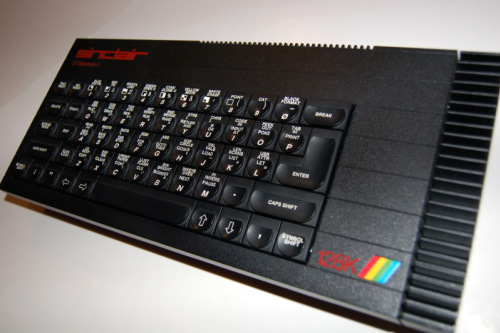
Speaking of the ZX Spectrum, that would make both a good & bad contender for a Project MSG port. It would be quite possible with tight, efficient coding. However, the little 8-bitter is rather weak in some areas. Particularly in the sound department, especially if we’re referring to the 16K/48K variants of the microcomputer. The Spectrum 128 on the other hand, apart from increased RAM also came equipped with the AY-3-8912, a 3-channel audio chip. Capable of producing superior music and sound effects to it’s forerunner.
sinclair,zx,zxspectrum,spectrum,128,128k,128K,RAM,ram,vintage,computer,computers,retro,retrogaming,games,gaming,cassette,cassettes,tape,tapes,micro,microcomputer,microdrive,drive,8bit,8-bit,AY,ay,chip,sound,AY sound chip,ay sound chip,texas,instruments,texasinstruments,yamaha,80s,80's,1982,1983,1984,1985,1986,1987,1988,amstrad,uk,UK,Spain,spain,SPAIN,gamedev,developer,developers
The ZX Spectrum was the true king of the 80’s

In all seriousness though, developing for a 16-bit system such as the Mega Drive or a close counterpart such as the Commodore Amiga, would be ideal. Although they both sport similar processors, they’re entirely different beasts to work on. Specifically in the way the two machines handle graphics, distinctively. The Amiga is well known for it’s graphical prowess and blitter, incredibly advanced for the period. Sega’s Mega Drive on the other hand seems rather anemic in the video display processor (VDP) department. With only 64K of video ram and far smaller colour count to the Amiga, yet breezier in the movement of sprites and 2D planes.

Of course there are several other computers and consoles that could come under consideration. While I’ve never owned one of these, MSX & 2/2+ have fascinated me to some degree. As a huge Compile fan, I loved how Aleste 1 & 2 and Aleste Gaiden turned out on the MSX2. A significantly capable machine that just seems to punch above it’s weight, resulting in output similar to that of Sega’s Master System.

Some food for thought, plenty of great machines of yore to ponder upon. Many of which still retain a huge following to this very day. Hopefully it won’t be long whereby I can lend my support to one or two of these systems.
Bass Cadet 04 – Silpheed

It seems like an eon since last a Bass Cadet article was posted. Finally it’s time to rectify matters with an interesting addition. I gave away a few clues in my previous article, savvy retro heads should have figured it out long before this post went up.

Sierra On-Line were one of my fave game development houses back in the 80’s with their strong line-up of adventure titles. A noteworthy developer, particularly on the PC. They had a knack for quality games and amazing packaging with killer cover art. Probably the end result of, a genuinely inspired passion for what gaming, was truly all about.

However, Sierra were not just a developer but also a publisher that established ties with one of their counterparts in Japan. This was none other than the equally proficient – Game Arts. Famous for releasing hit games such as Thexder, Silpheed, Zeliard and later on the Lunar and Grandia series of rpg’s. 

Game Arts started out developing for home computer platforms such as the MSX and NEC PC-8801. Both of which were hugely popular in Japan. Sierra On-Line ported and published Game Art’s earlier titles over to the west, with great success.

While Thexder remains a firm favourite of mine, and still enjoy to play it periodically. I have fond memories of Silpheed for a reason. This game came packed in with my very first sound card – Creative Labs’ Game Blaster. Finally I could enjoy arcade-quality FM tunes on my home PC and Silpheed would be my first foray.

I’ll be honest, Silpheed is not a particularly great game – it’s not terrible by any stretch either. Technically it’s impressive for it’s time, but rather bland. None the less, control is great and a space opera ambiance is conveyed rather competently. The music plays a big part in this, managing to cover cheerful, heroic and melancholic melodies. As the player, one does get a sense of partaking in an interstellar dog fighting scenario.

Silpheed’s BGM is composed by Hibiki Godai which just happens to be an alias. The real artist’s name is  Kohei Ikeda for the sound team known as Mecano Associates. Above is the soundtrack of the original version of the game when it debuted on the NEC PC-8801 on the 5th of December, 1986.

Rediscovering The Sound Blaster

Over the weekend I decided to dig out my old Pentium PC from the storeroom, saving it from permanent obsolescence. Ridding the machine of dust and grime was tiresome and time-consuming. A task that I didn’t confidently believe would be fruitful, as I was unsure whether the various components in the system were in working order.

Slowly but surely I took the computer apart, inspecting the motherboard, power supply unit, cables, video and sound cards, modem, various drives and their relevant controllers etc. On the surface everything seemed fine, just slightly dusty. Thankfully, no nasty capacitor leakage was detected, a scourge on many older computers and other electronic equipment. Even the CMOS battery seemed healthy, but later on it became apparent that it was out of juice and required replacement.

SB16, soundblaster, 16, pro, AWE64, FM, synthsis, Yamaha, retrogaming
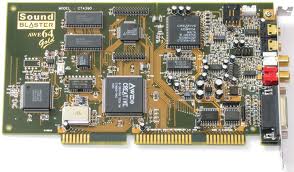
Sound Blaster AWE64 still sounds great today

Interestingly enough, with everything in bits and pieces was the opportunity for rediscoveries. Such being the case of the sound card. My trusty old workhorse didn’t just possess any pedestrian audio device…oh no! Instead it would be the Sound Blaster AWE64 from Creative Labs, truly a terrific card with impressive specifications for it’s time. However, it’s real draw is it’s FM Synthesis capabilities which just made me eager to fire it up urgently.

Carefully I attended to piecing together the machine before, finally powering it back on in years. Excited and at the same time worried of prospective faults. Fortunately my fears were soon alleviated, the hum from the power supply sounded as I remembered it. However there was a ‘CMOS Checksum error’ on start up, though that was due to battery depletion which was soon rectified. Apart from some wavy video output, which is somewhat attributed to electromagnetic interference from the power supply. I moved the graphics card to the furthest slot away from the PSU and image quality improved noticeably.

In all likelihood, there is probably a fault with the video card as I don’t recall encountering this issue before. Some shielding could help and am already looking into that. The good news is that everything else is in working order. Once I installed the drivers and tested the Sound Blaster, hearing the sounds generated from this card made all the difference. Finally, all my hard work in getting the Pentium up and running was validated. I now have an authentic and dedicated system which will gradually find it’s way in aiding in my game music compositions.

An awful lot can be said about the differences of working in an emulated environment versus actual hardware. Essentially convenience in contrast to veritable accuracy. One cannot discount the enormous cost factor and usefulness VSTi’s (virtual synthesizer plugins) bring to the table. For some, this may be the only feasible option available to them. And in many ways, music produced with the use of VSTi’s can sound just as good compared to hardware. Not forgetting to mention that, VSTi’s and even trackers have advanced tremendously in offering astoundingly accurate renditions.

Nonetheless, moments spent listening to the Sound Blaster in action is undeniable proof that hardware can trump software. There is an evident richness in the sound that doesn’t quite come through in emulation such as DOSBox or any other applications. Yamaha’s OPL2 & OPL3 FM sound chips were employed in the early range of Sound Blaster cards. Noble attempts at recreating the sounds emanating from these two chips have come close – but still nothing like the real thing.

NEC, PC88, 8801, retro, gaming, computers, japan, maestro, FM, synthesis, Yamaha
The choice PC of the first true FM maestros

It’s been awhile since I’ve last added a Bass Cadet post, and it’s about high time that I did. There’s a particular game soundtrack that I have in mind. I will only give away three clues to give you an idea on what is is. Here they are: Game Arts, Sierra On-Line & NEC PC-8801. Any retro game enthusiast should be able to figure this one out. Till next time 🙂