Tag Archives: game dev

Tools Of The Trade – GameMaker : Studio

indie,Indie,INDIE,game,Game,GAME,gamedev,Gamedev,GameDev,development,Development,tool,tools,80s,80's,90s,90's,animo,Animo,GameMaker,gamemaker,game-maker,game maker,maker,Maker,studio,Studio,STUDIO,2d,2D,platformers,shooters,shmups,shmup,SHMUP,SHMUPS,retro,RETRO,Retro,8bit,8-bit,8 bit,16bit,16-bit,16 bit,16-BIT,16 BIT,16BIT,16-Bit,16 Bit,16Bit,compu,computers,micro,computer,Microcomputer,easy,easier,easiest,old,school,skool,old-skool,cool,cooler,coolness,Cool,COOL,arcade,Arcade,arcades,Arcades,ARCADE,ARCADES,mame,MAME,Mame,snk,Snk,SNK,Sega,SEGA,sega,capcom,Capcom,CAPCOM,Nintendo,NINTENDO,nintendo,jaleco,Jaleco,JALECO,taito,TAITO,Taito,tech,techno,TECH,TECHNO,technology,Technology,technologies,TechnologiesGameMaker first came to my attention around 2006 as a creation tool and engine for 2D games. While I had my doubts of it’s abilities, I was intrigued enough to try it out. I remember first spending a weekend with it, gradually figuring out the basics. While there were some quirks (and still are) of how GameMaker handles a few things, first impressions were rather good.

It didn’t take long to ascertain that GameMaker does exactly what it’s meant to do. Developing games through it’s point and click interface was indeed a reality. Creating something more involved is also possible through it’s scripting language – GML. The long and short of it is that GameMaker is a competent and easy-to-use framework, primarily for 2D game development. However, users proficient in GML have been able to put together some impressive 3D games as well.

Unfortunately there is a degree of prejudice towards using tools such as GameMaker, primarily emanating from quarters of the development community. Various perceptions exist that are not entirely grounded. There’s a tendency to believe that a professional product cannot be crafted with such engines – a false assessment considering the quality of games already delivered using GameMaker.

Personally I do veer on the side that it would be better for developers to create their own custom engines. The reality is that this is just not a cost-effective solution in the long run. Months or even years developing an in-house engine could be better spent working on the actual game. No point in reinventing the wheel when off-the-shelf  engines are capable of tangible results.

Retro-style games are generally not very involved and therefore don’t overwhelm system resources. In fact, adding too many elements will effectively diminish a desirable retro-feel. Keeping a minimalist mindset is thus essential when creating such games. I’m using the latest iteration of GameMaker: Studio and have found that it’s capable of handling a great variety of complex, in-game systems and mechanics. It’s certainly not a package that is limited to crafting the type of indie retro experience that has become popular as of late.

Another area that a tool like GameMaker: Studio comes in handy is for rapid prototyping purposes. Simple ideas may be implemented and tested in a matter of minutes. My hard drive is flooded with a bunch of prototypes and mini-games I’ve put together over the years. A few of those are fun and interesting enough to be turned into commercially viable games. Just requiring a bit more development time and polish to come into their own.

As anyone reading this article can tell by now, my general experiences with GameMaker have been positive. I’ve enjoyed using this package as a hobbyist for several years now. While I’ve always wanted to release games in marketable form, other business and personal commitments made this difficult. A few relevant changes have occurred recently which affords me the opportunity to finally have a go at it.

The games that I will be releasing under the 16-BIT Shock banner will be small in scale, bite-size experiences. Short development cycles will be scheduled for the majority of projects. Longer, ambitious titles are also on the radar but will be determined on how feasible these are. Either way I will strive to ensure that all titles are stylish and gloriously retro.

A Winner Is You!


Developing For Vintage Hardware

It was a hectic but very productive week here at 16-BIT Shock HQ. Progress on the development of Project MSG continues tenaciously. While I’m not in a position to give a solid release date, it won’t be too far away.

Given the retro leanings of the project, there has been interest by some members of the homebrew community. I’ve been asked if there is a possibility for the game to be ported over to certain vintage systems. While neither myself or my development partner can commit to any additional platforms, right way. After all, Android support is by far the most requested platform for obvious reasons.

I also have a burgeoning interest in HTML5 development lately. Whether Project MSG is suited for this remains unclear – time will tell. 

sega,genesis,megadrive,mega,drive,retro,retrogaming,games,gaming,console,consoles,system,systems,japan,japanese,16bit,16-bit,80s,80's,90s,90's
Sega’s Mega Drive boasts one of the finest exterior designs for a game console

Nevertheless, developing for vintage hardware is an intriguing prospect that personally find exciting. The Sega Mega Drive / Genesis is the first potential candidate on the list. An amazing 16-bit console that possesses, near ideal specifications for the results that I want. I will need to brush up on my 68000 assembly, perhaps even some Z80 skills will come in handy. Once a proud owner of a Sinclair ZX Spectrum, learned enough Z80 assembly to code a Joust clone. But that was a very long time ago and I’m certainly a bit rusty now.

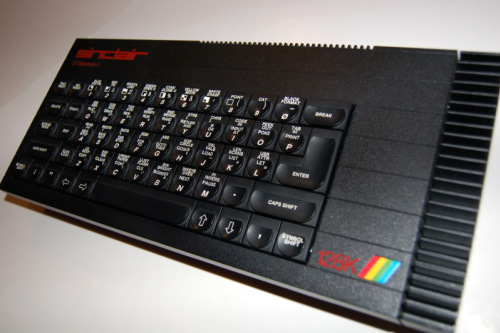
Speaking of the ZX Spectrum, that would make both a good & bad contender for a Project MSG port. It would be quite possible with tight, efficient coding. However, the little 8-bitter is rather weak in some areas. Particularly in the sound department, especially if we’re referring to the 16K/48K variants of the microcomputer. The Spectrum 128 on the other hand, apart from increased RAM also came equipped with the AY-3-8912, a 3-channel audio chip. Capable of producing superior music and sound effects to it’s forerunner.

sinclair,zx,zxspectrum,spectrum,128,128k,128K,RAM,ram,vintage,computer,computers,retro,retrogaming,games,gaming,cassette,cassettes,tape,tapes,micro,microcomputer,microdrive,drive,8bit,8-bit,AY,ay,chip,sound,AY sound chip,ay sound chip,texas,instruments,texasinstruments,yamaha,80s,80's,1982,1983,1984,1985,1986,1987,1988,amstrad,uk,UK,Spain,spain,SPAIN,gamedev,developer,developers
The ZX Spectrum was the true king of the 80’s

In all seriousness though, developing for a 16-bit system such as the Mega Drive or a close counterpart such as the Commodore Amiga, would be ideal. Although they both sport similar processors, they’re entirely different beasts to work on. Specifically in the way the two machines handle graphics, distinctively. The Amiga is well known for it’s graphical prowess and blitter, incredibly advanced for the period. Sega’s Mega Drive on the other hand seems rather anemic in the video display processor (VDP) department. With only 64K of video ram and far smaller colour count to the Amiga, yet breezier in the movement of sprites and 2D planes.

Of course there are several other computers and consoles that could come under consideration. While I’ve never owned one of these, MSX & 2/2+ have fascinated me to some degree. As a huge Compile fan, I loved how Aleste 1 & 2 and Aleste Gaiden turned out on the MSX2. A significantly capable machine that just seems to punch above it’s weight, resulting in output similar to that of Sega’s Master System.

Some food for thought, plenty of great machines of yore to ponder upon. Many of which still retain a huge following to this very day. Hopefully it won’t be long whereby I can lend my support to one or two of these systems.

Bass Cadet 04 – Silpheed

It seems like an eon since last a Bass Cadet article was posted. Finally it’s time to rectify matters with an interesting addition. I gave away a few clues in my previous article, savvy retro heads should have figured it out long before this post went up.

Sierra On-Line were one of my fave game development houses back in the 80’s with their strong line-up of adventure titles. A noteworthy developer, particularly on the PC. They had a knack for quality games and amazing packaging with killer cover art. Probably the end result of, a genuinely inspired passion for what gaming, was truly all about.

However, Sierra were not just a developer but also a publisher that established ties with one of their counterparts in Japan. This was none other than the equally proficient – Game Arts. Famous for releasing hit games such as Thexder, Silpheed, Zeliard and later on the Lunar and Grandia series of rpg’s. 

Game Arts started out developing for home computer platforms such as the MSX and NEC PC-8801. Both of which were hugely popular in Japan. Sierra On-Line ported and published Game Art’s earlier titles over to the west, with great success.

While Thexder remains a firm favourite of mine, and still enjoy to play it periodically. I have fond memories of Silpheed for a reason. This game came packed in with my very first sound card – Creative Labs’ Game Blaster. Finally I could enjoy arcade-quality FM tunes on my home PC and Silpheed would be my first foray.

I’ll be honest, Silpheed is not a particularly great game – it’s not terrible by any stretch either. Technically it’s impressive for it’s time, but rather bland. None the less, control is great and a space opera ambiance is conveyed rather competently. The music plays a big part in this, managing to cover cheerful, heroic and melancholic melodies. As the player, one does get a sense of partaking in an interstellar dog fighting scenario.

Silpheed’s BGM is composed by Hibiki Godai which just happens to be an alias. The real artist’s name is  Kohei Ikeda for the sound team known as Mecano Associates. Above is the soundtrack of the original version of the game when it debuted on the NEC PC-8801 on the 5th of December, 1986.